
La légende de la cloche d'Atri [Atri / Abruzzo / Italie]

Published on July 6, 2023 Themes: Abandon , Animal , Cheval , Chevalier , Cloche , Faim , Jugement , Justice , Maltraitance , Noblesse , Roi | Empereur , Vigne , 160 vues

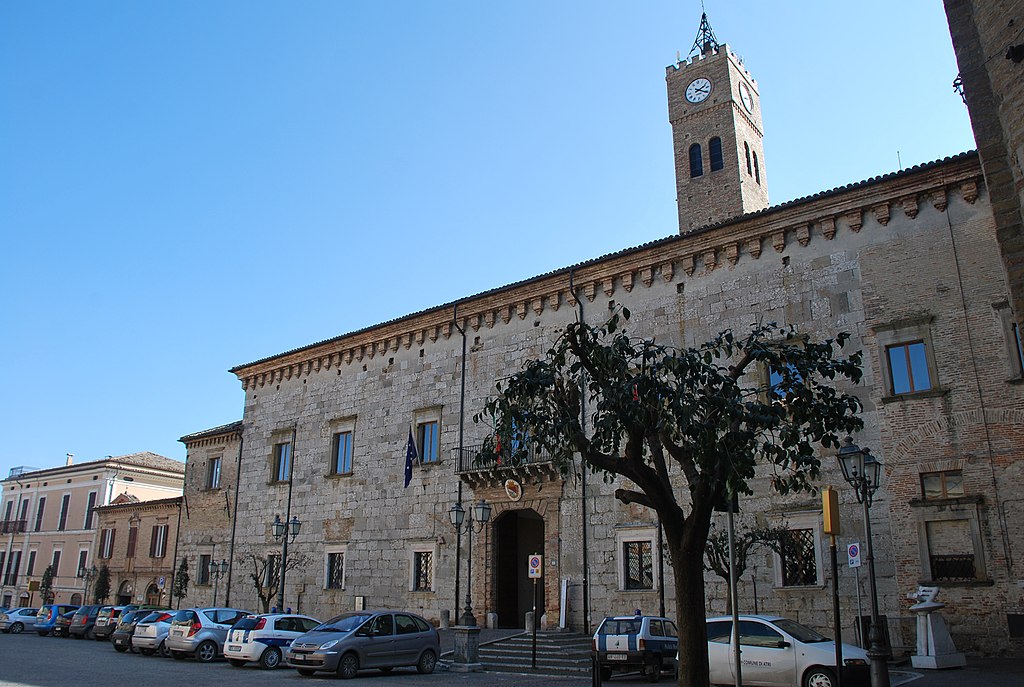
Palais des ducs d'Acquaviva
Lamberto Zannotti, CC BY-SA 3.0 , via Wikimedia Commons
ajouter aux favoris Ajouter une alerte en cas de modification augmenter la taille du texte reduire la taille du texte
Source: Guerber, Hélène Adeline / Contes et légendes, tome 2 (2 minutes)
Location: Palais des ducs d'Acquaviva / Atri / Abruzzo / Italie

Il y avait une fois, en Italie, un bon roi nommé Jean, qui déclara qu'il voulait que tout le monde obtînt justice dans son royaume. Comme il ne pouvait pas écouter toutes les plaintes, en personne, il fit pendre une grande cloche dans une tour de la ville, et fit proclamer que si quelqu'un avait à se plaindre, il n'avait qu'à sonner la cloche, et que le juge viendrait immédiatement sur la place publique pour lui rendre justice.

Les gens d'Atri, enchantés de cette idée, ne se firent pas faute de tirer la corde de la cloche chaque fois qu'ils avaient lieu de se plaindre, et dès que le son de la cloche frappait son oreille, le juge allait sur la place publique, où il jugeait la cause sans plus de délai.

Petit à petit, à force d'être tirée, la corde s'usa et devint si courte qu'on y attacha un bout de vigne pour la rallonger. C'était en été, la chaleur était accablante, la place publique était déserte, tout le monde dormait, quand tout à coup, au milieu de la journée, la cloche commença à sonner. Les habitants de la ville, réveillés en sursaut, se levèrent en disant: "Sûrement, quelque grande injustice a été commise, car la cloche sonne bien fort!"

Quelques minutes après le juge arriva sur la place publique, escorté de la plupart des habitants de la ville, et vit, non pas un homme ou une femme, mais un pauvre cheval bien maigre, qui, faute de mieux, mangeait les feuilles de la vigne attachée à la corde de la cloche.

Indigné d'avoir été dérangé pour si peu de chose, il demanda avec impatience :
"A qui est ce cheval, et que fait-il ici?"

Alors on lui raconta que le cheval appartenait à un grand seigneur des environs, qu'il avait été beau et fringant dans le temps, qu'il avait porté son maître dans bien des batailles, et que plus d'une fois il lui avait sauvé la vie par la rapidité de sa course. Mais, petit à petit, le coursier fringant était devenu vieux, et comme son maître était très avare, il avait donné ordre de le mettre à la porte, afin qu'il pût paître le long des chemins et sous les arbres.

Le pauvre cheval, vieux et boîteux, avait erré ainsi pendant bien des jours sans trouver assez de nourriture pour satisfaire à sa faim, et en arrivant enfin à la ville, il s'était arrêté pour manger les feuilles de vigne.

Le juge, dont la mauvaise humeur était entièrement dissipée, fit venir le maître du cheval, et après l'avoir bien interrogé, il découvrit que tout ce qu'on lui avait dit était parfaitement vrai. Alors il déclara que puisque le cheval avait fidèlement servi son maître tant qu'il en avait eu la force, le maître serait forcé, par la loi, de le nourrir et de le loger convenablement, aussi longtemps qu'il vivrait, et de le traiter avec le plus grand respect.

Les habitants de la ville reçurent ce décret avec des exclamations de joie, et déclarèrent que leur cloche était supérieure à toutes les autres, vu que même les animaux pouvaient obtenir justice et faire appel contre la cruauté de leurs maîtres. Quant au cheval, il fut reconduit en triomphe à son écurie, où son maître fut obligé de lui donner la meilleure place, et où il eut tout plein de foin et d'avoine tant qu'il vécut.

ajouter aux favoris Ajouter une alerte en cas de modification augmenter la taille du texte reduire la taille du texte
Available languages: English Français Deutsch
Source: Frary, Marie Hariette / The sunken city, and other stories (3 minutes)
Contributeur: Fabien
Location: Palais des ducs d'Acquaviva / Atri / Abruzzo / Italie

In olden times, there lived in Italy a kind-hearted king.
He was sorry for any trouble that came to his people and did all he could to make them happy.
Because of his goodness, the people called him Good King John.

“I wish all my people to be just,” said the king.
“And I wish everyone to be treated justly.”

Not all his people were as good as King John himself.
Many wronged their neighbors, and the neighbors complained to the good king.

“I will set up a great bell in the marketplace,” said the king at last.
“If anyone is wronged, let him ring the bell.
He shall have justice.”

So the king had a large bell set up in the marketplace, where anyone could ring it.
Then he appointed a good judge to right the people’s wrongs.

Many people rang the bell in the years that followed.
All received justice and went away happy.
The bell was used so often that the rope was worn away little by little.
At last, it became so short that many people could not reach it.
Then someone fastened a piece of grapevine to the rope.

Now, there lived in Atri an old knight.
In his younger days, he had loved to hunt and had kept many horses and dogs.
Now he could hunt no more, and so he sold all his horses except the one he had liked best.

It happened that the old knight began to think of nothing but money.
He wished to become very rich.

“What is the use of keeping this one horse?” he asked himself.
“He does nothing but eat and sleep.
It costs too much to keep him.
I will turn him out to look after himself.”

So the faithful old horse was turned out into the street.
It was the dry, hot season of summer, and there was little grass to be found.
The horse wandered about beneath the burning sun, finding a bite here and a bite there.

In his wandering, he finally came to the marketplace.
He saw the vine hanging from the bell rope.

“These leaves,” he thought, “are better than nothing, although they are withered.”

He began to pull at the withered leaves.
The very first pull set the great bell ringing loudly.
The poor horse was so hungry that he paid no attention to the ringing.
He kept on eating, and the bell rang louder and louder.

The judge heard the sound and wondered who was ringing the bell so loudly.
He put on his robe and hurried to the marketplace.

He was greatly surprised when he saw who had rung the bell.
Nevertheless, he felt sorry for the poor creature.

“Even the dumb beast,” he murmured, “shall have justice.
This is the horse of the Knight of Atri.”

Within a few minutes, a large crowd of people had gathered.
They told the judge the story of the old horse.
Their accounts, however, did not agree.
The judge therefore decided to summon the knight himself.

The heartless old knight said that the horse was useless to him and that he could no longer take care of it.
It cost too much money.

“Did he not always do his duty by you?” asked the judge.
“Did he ever refuse to carry you to the hunt or to bring you safely home?”

The old knight had to confess that the horse had always been faithful.

“The law therefore decides,” cried the judge, “that you shall provide him with shelter and food for as long as he lives.”

At this decision, all the people clapped their hands and shouted loudly.

The old knight ordered his servant to lead the horse back to the stable.
The people followed, cheering because even a dumb animal could obtain justice.

The fame of the Bell of Atri spread throughout Italy.

Today, people know very little about the other things that Good King John did.
They remember him simply as the king who set up the Bell of Justice at Atri.


Share this article on :


Il n'y a pas encore d'événements liés aux contes et légendes répertoriés dans ce département. Consulter l'agenda dans toutes les régions